
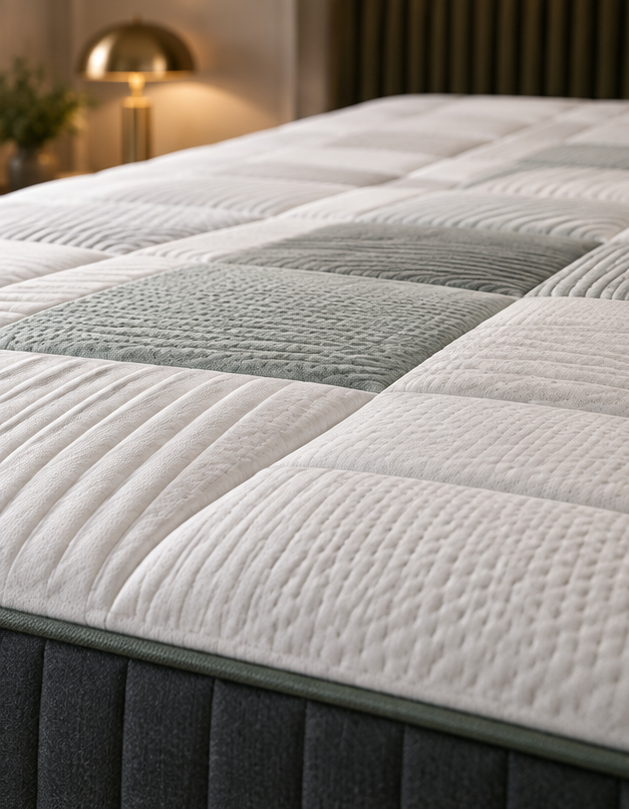
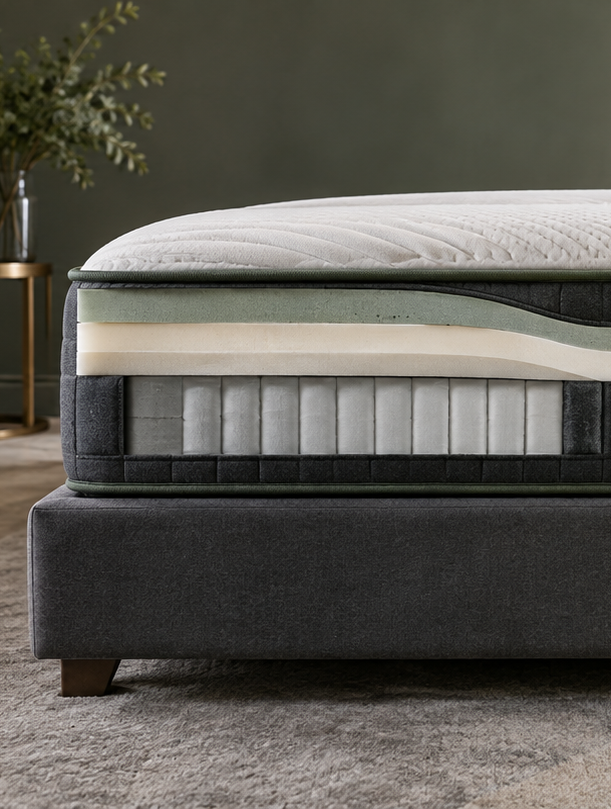
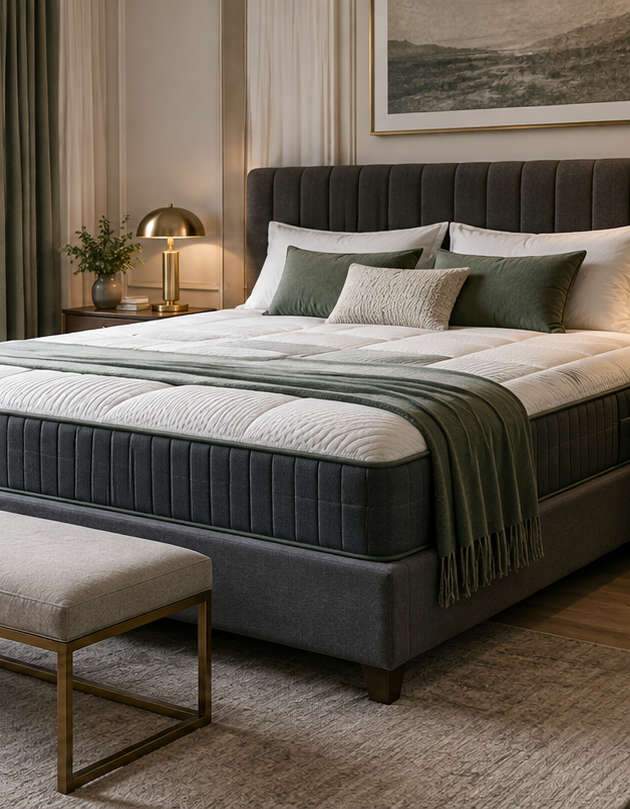
Orthopedic mattresses are designed around support clarity rather than only surface softness. Business buyers usually consider this category when they want a mattress line that speaks to spinal alignment, posture guidance, lumbar support, or firmer sleeping preferences. LuxeBella Group Inc. treats orthopedic mattress discussions carefully because the term should be tied to real construction choices, not vague promotional claims. The product should have a support plan that can be explained in specification documents and sales communication.
A common approach is zoned support. Different areas of the mattress can be tuned for shoulders, lumbar region, hips, and legs. The goal is to help the body rest in a more balanced position, reducing excessive sagging or uneven pressure. Zoned support may be created through pocket spring zoning, foam cuts, layered firmness changes, latex zones, or reinforced center sections. Some designs may also use special inclined structures or targeted reinforcement to guide posture.
Orthopedic does not always mean extremely hard. A mattress that is too hard can create pressure points, while a mattress that is too soft can allow poor alignment. Commercial buyers should define the target user group before choosing firmness. A senior living program, a retail wellness line, a dormitory supply plan, and a hotel upgrade package may all use different comfort targets while still presenting spinal support as the category theme.
Important specification topics include support core, zoning map, surface comfort layer, total height, edge support, cover fabric, breathability, firmness rating, and product claims. Buyers should also discuss whether the mattress will be used with platform beds, slatted bases, adjustable bases, or hospitality frames. The base can influence how the mattress feels and performs, so contract documents should avoid incomplete product descriptions.
Orthopedic mattresses can work well for B2B buyers who need a serious, health-conscious product position without turning the website into a medical claims platform. LuxeBella Group Inc. avoids diagnosing conditions or promising medical outcomes. Instead, the discussion focuses on mattress construction, support behavior, comfort expectations, and responsible business communication.
Retailers may use orthopedic mattresses to serve customers asking for firmer support or posture-oriented product language. Senior living, furnished housing, and hospitality projects may consider the category when they need a stable surface with clear support benefits. The best fit depends on how the mattress balances comfort layers with deeper support, because a posture-focused product still needs to feel acceptable to the intended user group.
A detailed orthopedic inquiry should include the target firmness, support core, zoning preference, top comfort material, height range, edge support expectation, base compatibility, destination market, and any health-related language the buyer intends to use. LuxeBella Group Inc. can then keep the discussion grounded in construction details and documented commercial terms.
LuxeBella Group Inc. presents this category for business buyers who need documented product discussions rather than a retail cart. Every request is reviewed through email or the inquiry form, followed by requirement confirmation, commercial discussion, contract execution, and agreed payment terms.
B2B Specification Review
Before any mattress category moves into a commercial proposal, LuxeBella Group Inc. expects the buyer to provide enough information for a serious specification review. Helpful details include company identity, intended market, product category, size range, firmness preference, target use environment, packaging needs, estimated quantity, timing expectations, and destination region. These details allow the discussion to focus on practical product fit rather than assumptions based on category names alone.
The review also separates general website information from contract-level commitments. Website pages explain product categories and cooperation methods, but they do not create final specifications, prices, delivery responsibilities, warranties, or payment obligations. Those items must be confirmed through written commercial communication and contract documents. This is especially important for B2B mattress programs because construction, comfort layer choices, packaging, destination, and inspection expectations can materially change the final arrangement.
Buyers are encouraged to share operational priorities early. A retailer may need showroom language and category differentiation. A hotel buyer may need consistent comfort across many rooms. A distributor may care about carton handling and repeatable specifications. A furnished housing operator may prioritize durability and replacement planning. LuxeBella Group Inc. uses documented communication to keep these requirements visible as the conversation progresses.